

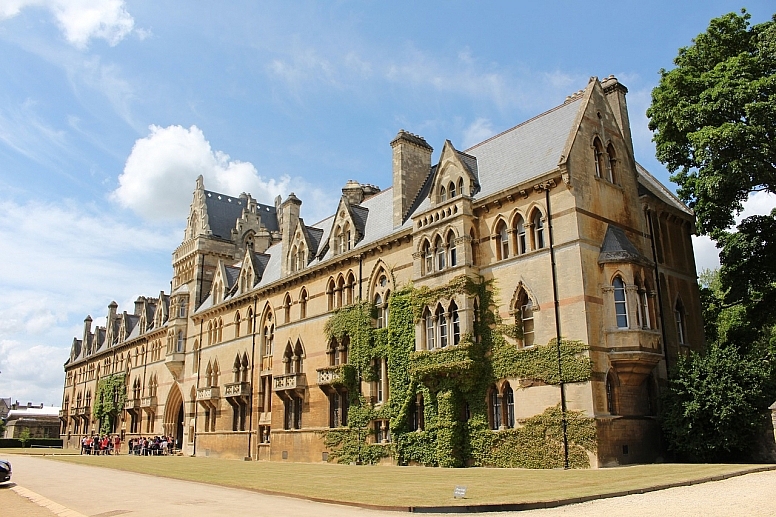
Getting into Oxford Philosophy, Politics, and Economics PPE
Few university courses carry the same reputation as Philosophy, Politics, and Economics at the University of Oxford. Commonly known as PPE, the course has produced prime ministers, economists, journalists, diplomats, entrepreneurs, and public intellectuals.
But the appeal of PPE goes far beyond prestige.
The degree is designed for students who are curious about how society works — from political systems and public policy to ethics, logic, economic behaviour, and international affairs. It is one of the most intellectually demanding and versatile degrees in the UK, which is exactly why competition for places is so intense.
If you are considering applying to Oxford PPE, this guide explains:
- What PPE actually involves
- The Oxford PPE entry requirements
- How the TSA admissions test works
- What to expect in the interview
- How successful applicants prepare
What is Oxford PPE?
PPE stands for Philosophy, Politics, and Economics.
It is an interdisciplinary degree that combines three subjects that are deeply connected:
- Philosophy develops logical reasoning, analytical thinking, and the ability to evaluate arguments critically.
- Politics explores political institutions, international relations, political theory, public policy, and government decision-making.
- Economics examines markets, incentives, economic systems, and quantitative analysis.
The course was introduced at Oxford in the 1920s and has since become one of the university’s most recognised degree programmes.
One reason PPE remains so popular is its flexibility. During the first year, students study all three disciplines. Later in the course, students can either continue with all three subjects or specialise in two.
This structure allows students to develop both breadth and depth — a combination that employers in law, finance, politics, journalism, consulting, and academia value highly.
Why is Oxford PPE so competitive?
Oxford PPE is one of the university’s most oversubscribed courses.
Each year, thousands of academically strong students apply for a relatively small number of places. Successful applicants are not only expected to achieve excellent grades, but also demonstrate:
- Intellectual curiosity
- Strong reasoning ability
- Clear communication skills
- Confidence in engaging with unfamiliar ideas
- The ability to think critically under pressure
Oxford tutors are not simply looking for students who can memorise information. They are trying to identify candidates with the potential to thrive in Oxford’s tutorial system, where discussion, debate, and analytical thinking are central to learning.
Oxford PPE Entry Requirements
Entry requirements can vary slightly depending on qualifications, but Oxford typically asks for:
A-Levels
AAA
International Baccalaureate (IB)
39 points overall, including core points
Scottish Advanced Highers
AA–AAB
Access to HE Diploma
45 credits at Distinction
Cambridge International Pre-U
D3, D3, D3
However, meeting the minimum grades alone is not enough.
Most applicants who apply for PPE already have extremely strong academic profiles. Competitive applicants often demonstrate consistent excellence across essay-based and analytical subjects such as Mathematics, History, Economics, Politics, English Literature, or Philosophy.
The TSA: Oxford’s Admissions Test
Applicants for PPE are also required to sit the TSA (Thinking Skills Assessment).
The TSA is designed to assess skills that are essential for success at Oxford, including:
- Problem-solving
- Critical thinking
- Numerical reasoning
- Logical analysis
- Evaluating arguments
Unlike many school examinations, the TSA is less about memorised knowledge and more about how effectively you process information and construct reasoning.
Strong preparation usually involves:
- Completing past papers under timed conditions
- Analysing mistakes carefully
- Improving speed and accuracy
- Developing familiarity with common question types
Because the TSA plays a significant role in shortlisting candidates for interview, consistent practice is extremely important.
What Happens in the Oxford PPE Interview?
For many applicants, the interview is the most intimidating part of the admissions process.
In reality, Oxford interviews are closer to academic discussions than formal interrogations.
Candidates are often interviewed separately in Philosophy, Politics, and Economics, although the exact structure varies between colleges.
During the interview, tutors may:
- Present you with unfamiliar information
- Ask you to analyse an argument
- Challenge your assumptions
- Explore how you respond to new ideas
- Test how clearly you explain your reasoning
You are not expected to know everything.
In fact, interviewers are usually more interested in how you think than whether you immediately arrive at the “correct” answer.
For example, you might be shown:
- A political scenario
- A graph or data set
- A philosophical statement
- A short article or passage
- An economic problem
Tutors want to see whether you can:
- Think logically
- Adapt your ideas when challenged
- Engage thoughtfully with criticism
- Communicate clearly
- Remain intellectually flexible
Changing your position during the discussion is not a weakness. Often, it demonstrates intellectual maturity.
How to Prepare for Oxford PPE
1. Build Strong Academic Foundations
Preparation begins long before the interview.
Oxford expects applicants to be performing at a consistently high academic level throughout sixth form or college. This means:
- Taking your school studies seriously from the start
- Developing strong essay-writing skills
- Improving analytical reasoning
- Reading beyond the school curriculum
Subjects such as History, Economics, Mathematics, Politics, Philosophy, and English can all help develop relevant skills.
2. Read Widely and Critically
One of the biggest mistakes applicants make is listing books in their personal statement that they cannot discuss confidently.
Oxford tutors may ask about material you mention in your application, so it is far better to engage deeply with a smaller number of books than to compile a long reading list superficially.
Useful reading might include:
- Political philosophy
- Contemporary economics
- Public policy
- Ethics
- International relations
- Current political debates
The key is not simply reading, but analysing arguments and forming your own views.
3. Stay Informed About Current Affairs
PPE applicants should have a genuine interest in the world around them.
Reading high-quality journalism regularly can help you develop informed opinions and stronger analytical skills.
Publications commonly recommended by successful applicants include:
- The Economist
- Financial Times
- The Guardian
- The New York Times
- Foreign Affairs
You do not need to become an expert on every issue. What matters more is your ability to think carefully about political, economic, and ethical questions.
4. Practise Thinking Out Loud
Oxford tutorials are discussion-based, and interviews are designed to reflect that environment.
One of the most effective ways to prepare is by practising how you explain your thinking verbally.
This could involve:
- Discussing ideas with teachers or friends
- Practising interview questions aloud
- Debating current affairs
- Explaining complex ideas clearly and concisely
The goal is not to sound rehearsed.
Instead, you should aim to become comfortable thinking through difficult problems in real time.
5. Get Constructive Feedback
Preparation is often more effective when someone can challenge your thinking and identify weaknesses in your reasoning.
Many successful applicants seek feedback from:
- Teachers
- Mentors
- Former Oxford students
- Academic enrichment programmes
- Specialist admissions tutors
A strong mentor can help students:
- Improve interview technique
- Refine TSA preparation
- Strengthen personal statements
- Develop confidence in discussing complex ideas
The most valuable support focuses on improving genuine intellectual skills rather than teaching scripted answers.
What Makes a Strong Oxford PPE Applicant?
Strong applicants are rarely defined by perfect answers.
Instead, they tend to share several characteristics:
- Intellectual curiosity
- Academic discipline
- Willingness to reconsider assumptions
- Clear communication
- Independent thinking
- Genuine enthusiasm for ideas
Oxford tutors are looking for students who enjoy exploring difficult questions — even when those questions do not have simple answers.
Applying to Oxford PPE is challenging, but it is also an opportunity to engage deeply with ideas that shape the modern world.
The strongest candidates are not necessarily those who appear the most polished. Often, they are the students who demonstrate curiosity, thoughtful reasoning, and the ability to engage openly with unfamiliar problems.
Whether you are preparing for the TSA, refining your personal statement, or practising for interviews, the most effective preparation is usually consistent, intellectually honest work over time.
For students seeking additional guidance, structured support from experienced mentors or admissions specialists can also help clarify the process and build confidence at each stage of the application.
With strong preparation, thoughtful reading, and a genuine interest in ideas, an Oxford PPE application can become far more manageable — and far more rewarding.





0.3117