

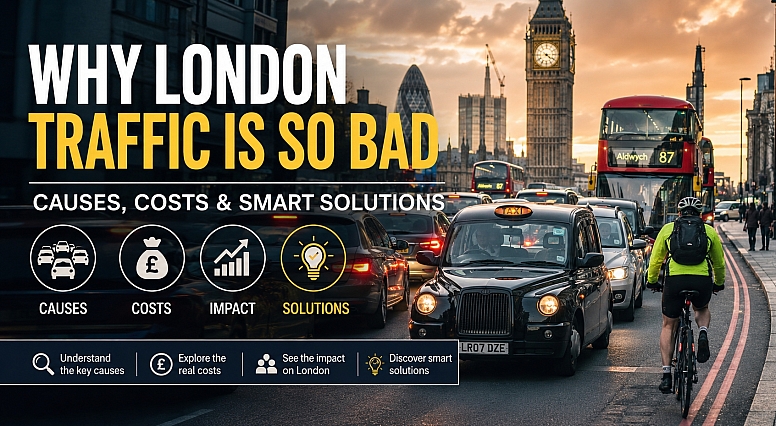
Why London Traffic Is So Bad: Causes, Costs & Smart Solutions
Traffic congestion remains one of the biggest challenges facing London today. From delayed commutes and overcrowded roads to rising pollution levels and increased delivery times, congestion affects millions of residents, businesses, tourists, and commuters every single day.
As one of the world's busiest financial and cultural capitals, London experiences constant pressure on its transport infrastructure. With more vehicles on the roads, increasing delivery demand, population growth, ongoing construction projects, and changing commuting habits, traffic bottlenecks have become a daily reality across many parts of the city.
While Transport for London (TfL) continues to invest in public transport, cycling infrastructure, and low-emission initiatives, reducing congestion requires a combination of smarter urban planning, improved transport options, technological innovation, and changes in commuter behaviour.
In this guide, we look into the major causes of traffic congestion in London, the impact it has on residents and businesses, and the services, technologies, and mobility solutions helping the city move more efficiently.
What Causes Traffic Congestion in London?
1. Population Growth and Urban Density
London is the largest and most populous city in the United Kingdom, with millions of residents, workers, students, and visitors travelling across the capital every day. As the population continues to grow, the demand placed on roads, public transport systems, and parking infrastructure increases significantly.
High population density naturally leads to greater vehicle usage, increased delivery traffic, and overcrowded transport routes, particularly during morning and evening rush hours.
2. Limited Road Space
One of London's biggest challenges is its historic road layout. Many streets were originally designed centuries ago and are not suited to modern traffic volumes. Narrow roads, one-way systems, protected areas, and densely built urban environments make large-scale road expansion extremely difficult.
Unlike newer cities with wider roads and modern infrastructure planning, London must operate within limited physical space, which contributes to bottlenecks and slower traffic flow.
3. Heavy Reliance on Private Cars
Despite having one of the world's largest public transport systems, many residents and commuters still rely heavily on private vehicles. Convenience, commuting patterns, accessibility issues, and travel flexibility all contribute to continued car usage across Greater London.
High numbers of private vehicles increase congestion, reduce average traffic speeds, and contribute to parking shortages in busy areas.
4. Roadworks and Infrastructure Projects
Roadworks are a constant feature across London. While infrastructure improvements are essential for maintaining transport networks, construction zones frequently disrupt traffic flow and create temporary congestion hotspots.
Lane closures, utility maintenance, rail upgrades, and property developments can all increase journey times for motorists and public transport users alike.
5. Delivery and Commercial Vehicles
The rapid growth of e-commerce and same-day delivery services has dramatically increased the number of vans and commercial vehicles operating across London.
Delivery vehicles often stop frequently, occupy loading bays, and contribute to congestion in busy commercial districts. The rise in online shopping has made urban logistics one of the fastest-growing contributors to city traffic.
6. Public Transport Overcrowding
London's public transport network is extensive, but overcrowding remains a major issue during peak travel periods. Delays, engineering works, strikes, and capacity limitations can sometimes encourage commuters to use private vehicles instead.
Improving reliability, accessibility, and network capacity remains a major focus for transport planners.
7. Tourism and Events
London attracts millions of tourists each year, in addition to hosting concerts, sporting events, exhibitions, and cultural festivals. These activities increase demand on roads, taxis, buses, and rail services.
Major events in Central London can quickly create temporary congestion spikes across surrounding areas.
8. Ride-Sharing and Taxi Services
Ride-sharing platforms and app-based taxi services have changed urban mobility across London. While these services offer convenience and accessibility, they also increase the number of vehicles circulating on city roads, particularly in busy entertainment and business districts.
Many vehicles spend large amounts of time waiting for passengers or travelling between bookings, which can contribute to overall traffic volume.
9. Inadequate Cycling Infrastructure
Cycling continues to grow in popularity across London, but infrastructure improvements still lag behind demand in some boroughs. Limited cycle lanes and safety concerns discourage some commuters from switching away from cars.
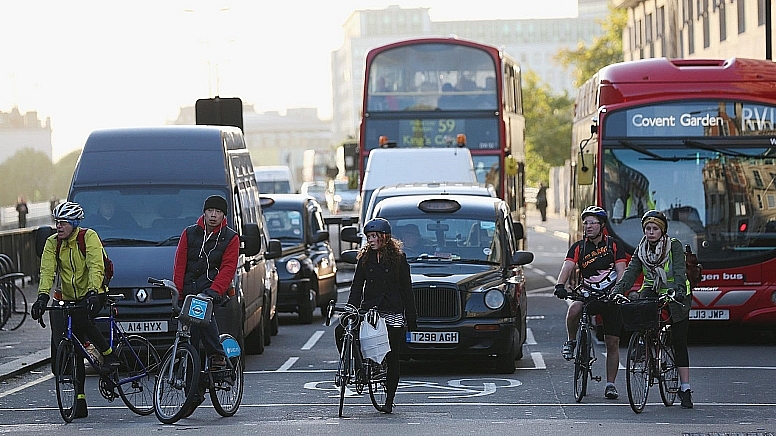
Further investment in protected cycling infrastructure could help reduce congestion and improve air quality throughout the capital.
10. Environmental Restrictions and Traffic Management Measures
London has introduced several traffic management schemes designed to reduce pollution and improve air quality, including the Congestion Charge and Ultra Low Emission Zone (ULEZ).
While these measures aim to encourage cleaner transportation and reduce unnecessary journeys, they have also changed traffic patterns across different parts of the city.
The Impact of Traffic Congestion in London
Economic Impact
Traffic congestion costs businesses and commuters valuable time every year. Delays affect productivity, delivery schedules, fuel consumption, and operating costs for transport-dependent industries.
Environmental Concerns
Congested traffic leads to increased vehicle emissions, contributing to poor air quality and environmental concerns throughout Greater London. Reducing congestion is closely linked to improving public health and achieving sustainability targets.
Mental Health and Quality of Life
Long commutes and daily traffic delays can increase stress levels, reduce work-life balance, and negatively affect overall quality of life for residents and workers.
What Is the Congestion Charge in London?
The London Congestion Charge is a traffic management system introduced to reduce vehicle traffic in Central London. Drivers entering designated zones during operational hours must pay a daily fee unless exempt.
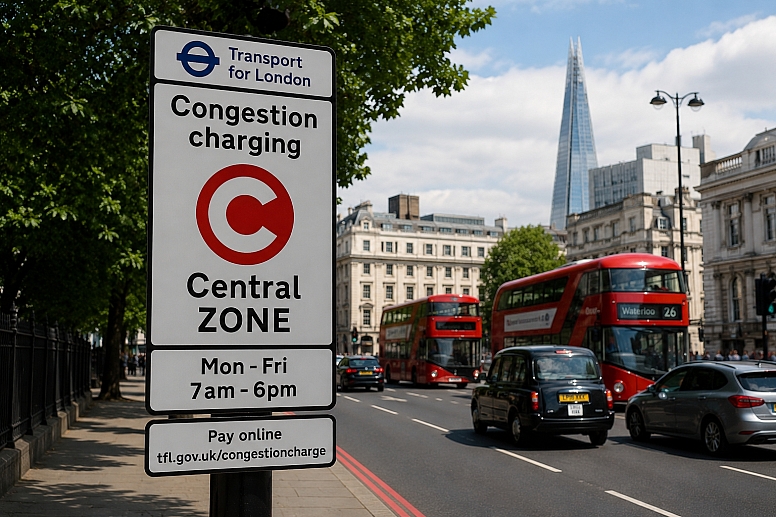
The scheme was designed to encourage public transport usage, reduce unnecessary journeys, and improve air quality within some of the busiest parts of the capital.
Revenue generated from the Congestion Charge is reinvested into London's transport infrastructure, including public transport improvements, road maintenance, and sustainable travel initiatives.
Services Helping Reduce Traffic Congestion in London
As congestion continues to affect commuters and businesses, a growing number of transport, technology, and mobility services are helping London become more efficient, sustainable, and accessible.
1. Route Planning and Traffic Apps
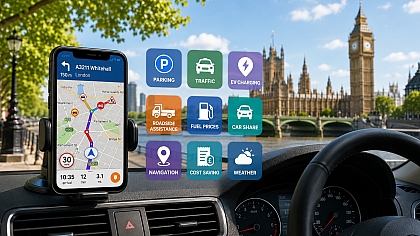
Live traffic and route-planning services help motorists avoid congestion hotspots, accidents, and roadworks in real time.
- GPS navigation platforms
- Journey planning apps
- Traffic monitoring services
- Fleet route optimisation software
- Commercial driver navigation tools
2. Electric Vehicle Charging Services
London's transition toward cleaner transportation has increased demand for EV charging infrastructure across residential and commercial areas.
- Public EV charging networks
- Rapid charging stations
- Home charger installation services
- Commercial fleet charging providers
- Electric vehicle maintenance services
3. Smart Courier and Delivery Solutions
Modern logistics companies are using eco-friendly delivery methods and advanced route optimisation systems to improve urban mobility.
- Cargo bike delivery companies
- Electric van courier services
- Same-day delivery providers
- Last-mile logistics solutions
- Warehouse distribution technology
4. Parking and Mobility Platforms
Smart parking technology helps reduce unnecessary driving caused by motorists searching for available parking spaces.
- Parking reservation apps
- Park-and-ride services
- Smart parking systems
- Car-sharing platforms
- Ride-sharing services
5. Cycling and Micromobility Services
Alternative transport services are helping reduce short-distance car journeys across London.
- Bike hire schemes
- E-bike providers
- Cycle training organisations
- Secure bicycle storage companies
- Electric scooter rental services
6. Breakdown Recovery and Roadside Assistance
Vehicle breakdowns can quickly create severe congestion on busy London roads. Recovery services help reduce disruption and improve traffic flow.
- Emergency breakdown recovery
- Roadside repair services
- Vehicle towing companies
- Battery replacement services
- Commercial fleet recovery support
7. Fleet Management and Telematics
Businesses operating multiple vehicles are increasingly using fleet management systems to improve efficiency and reduce unnecessary mileage.
- Fleet tracking systems
- Vehicle telematics platforms
- Fuel management software
- Commercial driver monitoring tools
- Business transport analytics
8. Public Transport and Mobility Technology
Technology providers continue to improve London's public transport experience through digital innovation and smart mobility solutions.
- Mobile ticketing apps
- Transport payment systems
- Real-time travel updates
- Passenger information platforms
- Integrated mobility services
London Traffic Congestion Statistics
- Millions of journeys are made across London every day
- Peak congestion typically occurs during weekday commuting hours
- Commercial vehicle traffic has increased significantly due to the growth of online shopping growth
- Public transport remains one of the most heavily used systems in Europe
- Central London experiences some of the highest traffic density levels in the United Kingdom
Frequently Asked Questions
What causes traffic congestion in London?
Population density, limited road space, roadworks, delivery traffic, commuting patterns, tourism, and high levels of private vehicle usage cause traffic congestion in London.
Does the Congestion Charge reduce traffic?
The Congestion Charge has helped reduce traffic levels in parts of Central London while encouraging greater use of public transport and lower-emission vehicles.
What are the busiest roads in London?
Some of London's busiest roads include the North Circular, South Circular, M25 approaches, and major routes through Central London.
How does traffic congestion affect businesses?
Congestion increases fuel costs, delivery delays, employee travel times, and operational expenses for many businesses operating across London.
What solutions could reduce traffic congestion in London?
Improved public transport, cycling infrastructure, smart traffic systems, electric vehicles, flexible working, and better urban planning could all help reduce congestion levels.
Traffic congestion in London remains a complex challenge influenced by population growth, economic activity, infrastructure limitations, and changing transport demands. While initiatives such as the Congestion Charge, ULEZ, cycling expansion, and public transport investment have helped improve parts of the city, congestion continues to affect residents, businesses, and commuters every day.
As London continues to evolve, innovation and collaboration between transport providers, technology companies, businesses, and local authorities will play a major role in improving mobility across the capital.
From smart traffic technology and sustainable logistics to electric vehicle infrastructure and alternative transport solutions, the future of urban mobility in London will depend on balancing accessibility, efficiency, and environmental responsibility.
LEAVE A COMMENT
Recent Posts










0.3934