
London Transport
Getting Around and About in London
The thought of arriving in a new city can be a bit daunting, but if you get to know about London's transport options, you will find it is relatively easy to get from A to B in the Capital. With a blend of timeless icons and cutting-edge digital tools, navigating London is easier than ever. Soon enough, you will know it like the locals.
The Digital Hub: The Official TfL App & Contactless Payments
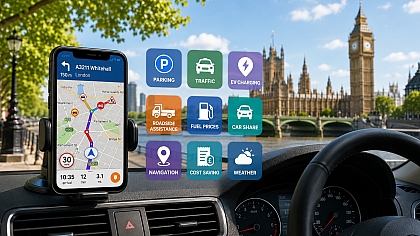
Before delving into specific tickets, your smartphone is your most powerful travel tool. The official Transport for London (TfL) app is indispensable. It provides real-time travel information, step-by-step journey planning that combines all modes of transport, live bus arrivals, tube line status, and service updates. Crucially, it includes a ‘Hopper fare’ counter and your journey history.
For payment, beyond the Oyster card, remember that using a contactless debit or credit card, or a digital wallet (like Apple Pay or Google Pay), offers the same convenient capping as Oyster. The system automatically calculates the cheapest fare daily and weekly, charging you only up to the relevant Travelcard price. For most visitors, tapping a contactless card is the simplest option.
Oyster and Travel Cards
Cheaper than paper travel cards and bus tickets, the Oyster card remains a cornerstone of London transport, saving you time and money when travelling on London's buses and trains, including the Tube, Overground, Elizabeth Line, and National Rail services, as well as trams and the DLR.
Oyster cards are electronic smart card tickets, which means they are quick and easy to use and do not even have to be removed from a wallet or cardholder when you touch them on the yellow readers. For the best value, always remember to tap in and tap out on trains and tubes, and just tap in on buses and trams.
An Oyster card is reusable, unlike paper tickets, which are more suitable when you will only be in London for a day. You can now top up your Oyster card instantly via the TfL app, at stations, or at many local shops.
Kids Travel Free
Children between the ages of 5 and 10 can travel on the Tube, Overground, DLR, and Elizabeth Line for free when accompanied by an adult with a valid ticket, and for free at any time on London’s buses and trams. Kids under the age of 5 can travel for free on all services. For older children (11-15), a Young Visitor discount can be loaded onto an Oyster card at a Tube station ticket office, granting child-rate fares for up to 14 days.
London Buses
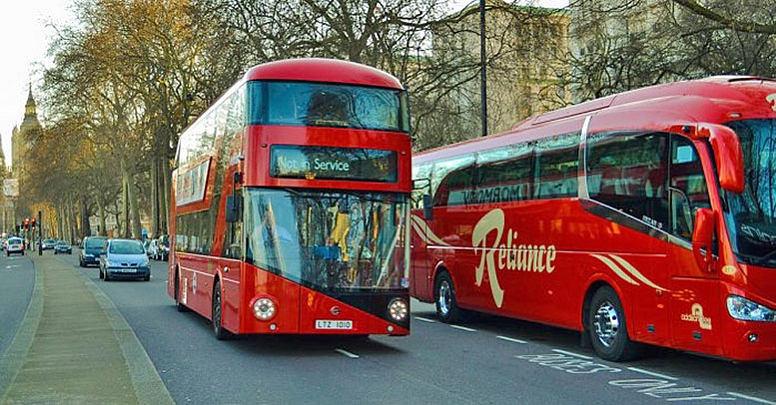
The well-loved, iconic red London bus is a convenient and cost-effective way to get around while enjoying the sights. Bus services also run throughout the night on key routes. Use the TfL Go app or digital signs at bus stops to see live arrival times. Remember, you cannot pay with cash on buses—you must use Oyster, a contactless card, or a valid travelcard.
London Taxis & Ride-Hailing Apps
Although expensive, licensed black cabs (now in various colours) are ideal and can be hailed on the street. All black cab drivers have passed the rigorous 'Knowledge' test. For a more modern alternative, ride-hailing apps like Uber, Bolt, FREE NOW, and Gett are widely used. They offer upfront pricing and cashless payment, and can often be cheaper than a black cab for pre-planned journeys. For traditional minicabs, always book through a licensed private hire company (like Addison Lee) for safety and fixed fares.
London taxis offer an easy, safe, and direct way to travel. So why not splash out and hire one for a unique ride through the city?

London Trains and the Tube
The London Underground rail network, often referred to as the Tube, is a quick and convenient way of travelling around London. The new Elizabeth Line (the purple line) offers fast, high-frequency connections across London and to Heathrow. For navigation, use the TfL Go app’s interactive map or Citymapper, which is excellent for finding the quickest route, including walking times between platforms and real-time disruption alerts.
For train journeys beyond the Underground, London's Overground and National Rail services are efficiently integrated. Trainline and National Rail Enquiries apps are useful for longer-distance journeys and advance ticket purchases.
Walking
Undoubtedly, the cheapest way to get around is on foot. It lets you experience London's best features up close. Use apps like Google Maps’ walking directions or Citymapper to discover optimized walking routes. It is often quicker to walk between nearby central Underground stations (e.g., Leicester Square to Covent Garden) when you consider crowds, stairs, and waiting times.
Biking & E-Scooters
Santander Cycles (formerly Barclays Cycle Hire), affectionately known as ‘Boris Bikes’, makes for a fun and active way to see the city. Docking stations are widespread. Renting costs from £1.65 for up to 30 minutes, and payment is taken via card at the terminal or through the official Santander Cycles app. For longer journeys, consider regulated e-scooter rentals available through operators like Lime, Tier, and Dott in certain London boroughs. Note: Privately owned e-scooters remain illegal to use on public roads and pavements.
Getting to and from the Airport
Black cabs and pre-booked minicabs are available from all airports. For a seamless app-based service, consider booking an airport transfer through Uber or similar apps in advance. Express trains are often the fastest option: the Elizabeth Line and Heathrow Express serve Heathrow; Gatwick Express serves Gatwick; and the Stansted Express serves Stansted. The TfL app plans all these routes.
The most cost-effective option from Heathrow is the Tube (Piccadilly Line). For the best airport parking deals, use comparison websites like HolidayExtras or AirPortRacing for Heathrow, Gatwick, Luton, and Stansted.
Pro Tip: For a comprehensive, real-time overview of your journey options, combining walking, cycling, and all public transport with accurate disruption alerts, apps like Citymapper and Apple Maps (with transit enabled) are highly recommended alongside the official TfL tools.
LEAVE A COMMENT
Recent Posts










0.2557
COMMENTS
Great!! Crazed to see transport in London.I like them to follow the cheapest way to get around the city is on foot..I was looking for information about transport in London really found this helpful
London is the best city)
Hey watch more Beautiful places on there