
How to Thrive as a Digital Nomad Working from an RV
For London visitors craving longer stays without London-level rent, the digital nomad lifestyle can look tempting, until the logistics pile up fast. RV living promises remote work opportunities and a mobile office setup, but the core tension is real: keeping income steady while life, work, and travel share the same small space. The payoff is bigger than saving money; it’s the chance to build location-independent careers with more control over time, pace, and where “home” parks next. The right starting point is an honest check on comfort with uncertainty, routines, and trade-offs.
Set Up Your Home, Budget, and RV Plan
Here’s how to move from idea to plan.
This process helps you lock in the three decisions that make early RV life feel stable: what to do with your home, what you can truly afford, and what RV will support your workdays. For London visitors mapping a longer, flexible stay, these steps turn “maybe we could” into a clear setup that protects your time, energy, and sightseeing budget.
- Step 1: Choose sell vs rent with a 6-month test. Decide based on flexibility first: renting your place out can keep a safety net, while selling can simplify and fund the transition. Run a six-month scenario for each option, including storage, property management, insurance, and the time it would take to reverse course if plans change. Confirm the choice that reduces stress, not just the one that looks best on paper.
- Step 2: List your true start-up costs before you shop. Write a one-page start-up checklist that covers deposits, downsizing, connectivity gear, and the one-time costs of getting road-ready. The phrase “start-up costs” matters because it forces you to budget for the transition, not only the day-to-day life afterwards. This prevents a “surprise expense” month that disrupts your travel plans.
- Step 3: Build a steady monthly RV-life budget. Start with your non-negotiables: minimum income, savings target, and essential bills, then add fuel, camp fees, food, and a realistic maintenance buffer. Set a weekly spending cap for experiences so you can enjoy London without constantly recalculating every meal or ticket. Review the budget weekly for the first month and adjust once you see real numbers.
- Step 4: Pick an RV type and size that protects your work routine. Choose layout over looks: prioritise a dedicated seat and table, quiet calls, and enough power for your laptop and hotspot. Test “rainy day mode” by imagining 8 hours inside with work, meals, and rest, because that is when a too-small space starts costing you productivity. Confirm parking and manoeuvrability comfort before committing, especially if you are new to driving larger vehicles.
- Step 5: Commit to a simple 30-day starter plan. Set your first month around consistency: a predictable work schedule, shorter drives, and fewer location changes while you learn what you need. Use that month to validate your budget assumptions and whether the RV actually supports your routines. After 30 days, keep what works and simplify what does not.
A calm start makes the whole journey easier to enjoy.
Drive, Maintain, and Work Smoothly: A Road-Ready Routine
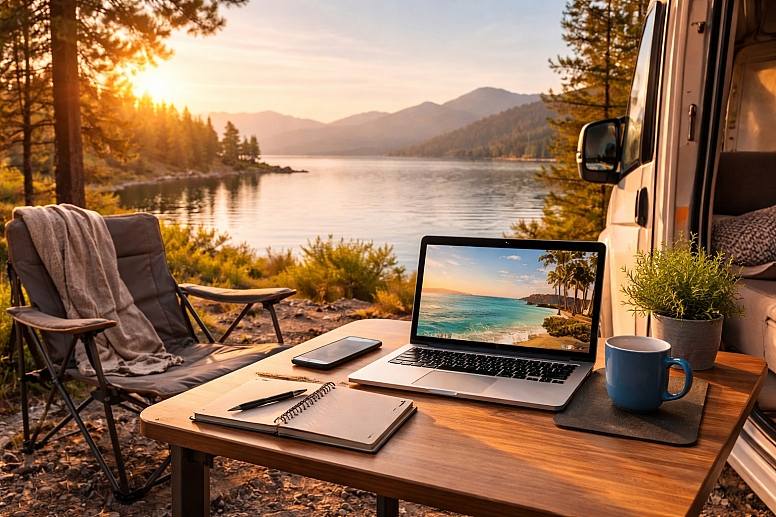
A steady routine is what turns RV life from “constant scramble” into something you can actually enjoy, whether you’re parked outside a museum in London or tucked into a quieter campsite. Use these habits to stay safe on the road, prevent avoidable breakdowns, and protect your work hours.
- Use a simple “drive-day” rule to stay safe: Pick a default maximum driving window (for many beginners, 3–5 hours behind the wheel is plenty) and plan arrivals before late afternoon. You’ll drive more calmly, have time to park and troubleshoot issues in daylight, and still eat a real dinner instead of grabbing whatever’s closest. On driving days, treat sightseeing as a bonus, not the plan; one short walk or a single attraction is enough.
- Do a 10-minute pre-departure loop every time: Before you move, walk one full circle around the RV: check tyres for obvious damage, confirm storage doors are latched, look for anything hanging low, and verify your lights work. Inside, secure loose items, latch cabinets, and stow anything that could become a projectile. This tiny ritual prevents the most common “why did that happen?” problems.
- Create a weekly maintenance micro-checklist (and keep it visible): Choose one day a week to check fluid levels, battery/shore power connections, tyre pressure, and your water system for leaks. Add a monthly reminder to inspect seals around windows/roof edges and to test safety gear (smoke/CO detectors). Beginners do best when the list is short and repeatable, write it on paper, and stick it where you’ll see it.
- Build a workday that fits RV realities: Decide your “office hours” and protect them with a clear start and stop ritual: set up your workspace, silence notifications, then fully pack it away when you’re done. This is where committing to the plan matters; your routine won’t feel magical on day three, but it gets easier when you repeat it. If you’re moving campsites, schedule calls for non-driving days and use travel days for lighter tasks.
- Balance travel days, admin days, and real rest: A sustainable rhythm is often two “work-heavy” days, one “admin + errands” day (laundry, dumping, groceries), and one genuinely lighter day for exploring or recharging. If you try to drive, sightsee, and hit a full work schedule at the same time, burnout shows up fast. Remember, this isn’t a sprint; you’re building a lifestyle, not winning a week.
- Budget like a nomad: track the ‘Big 4’ weekly. From your earlier RV-life budget, pull out four categories that swing the most: fuel, campsites/parking, food, and maintenance. Once a week, total them and compare to your weekly target so you can adjust early (drive fewer miles, cook two extra meals, pick a less pricey stop) instead of “finding out” at the end of the month. Keep a small repair buffer separate so a surprise fix doesn’t wreck your travel plans.
These routines keep your driving safer, your RV more reliable, and your work schedule more predictable, so you can choose remote jobs and client communication habits that actually match how you move and get paid on the road.
Upskilling for Remote Tech Careers
If you’re interested in expanding your remote work opportunities while on the road, consider investing in a formal tech education. Many digital nomads find that earning a computer science degree online provides both structure and credibility — teaching critical skills like programming, algorithms, and systems design that directly translate to freelance or remote roles.
This type of degree can help you transition from general remote work to higher-paying technical positions, such as software engineering, data analysis, or cybersecurity, all of which are in high demand and adaptable to a location-independent lifestyle.
Remote Work Options at a Glance
With your RV routines set, your next win is choosing work setups that stay stable while you travel. This table compares common ways to earn remotely and stay responsive so you can still enjoy London without constantly checking your phone.
|
Option |
Benefit |
Best For |
Consideration |
|
Remote employee role |
Predictable pay and scope |
Stable hours, fewer client tasks |
Needs reliable connectivity during set times |
|
Retainer-based freelancing |
Steady monthly income |
Ongoing clients, recurring deliverables |
Requires clear boundaries and a renewal process |
|
Project-based freelancing |
Flexible schedule per project |
Skill builders, portfolio growth |
Income can be uneven between projects |
|
Platform marketplace gigs |
Quick lead flow |
Fast starts, simple service offers |
Fees and client fit vary widely |
|
Client portal + scheduled updates |
Reduces status-check messages |
Travel weeks and time zone shifts |
Setup time replaces ad hoc texting |
A simple rule: if your route is busy, prioritise predictability over maximum flexibility. Many teams move from spreadsheets and handwritten notes to a shared system because centralised updates reduce missed follow-ups and help clients feel informed. Pick one primary model, then add one communication habit that keeps trust high while you explore.
Practical Q&A for RV Nomad Work Life
A few quick clarifiers to reduce the guesswork.
Q: How do I decide whether to sell or rent out my home before hitting the road in an RV?
A: Start with your runway: if you need cash to pay off debt or fund several months on the road, selling can simplify everything. If you want a safety net and can handle repairs and vacancies, renting may preserve long-term options. Either way, price out property management, insurance, and taxes, so your plan still works when surprises pop up.
Q: What are the key maintenance tips to keep my RV in good condition while travelling?
A: Use a simple weekly checklist: tyre pressure, fluid levels, battery health, and a quick roof and seal inspection. Keep a small “fix-it” kit and log issues immediately, because minor leaks become major downtime fast. Schedule preventative service around work-heavy weeks, not during them.
Q: How can I effectively manage my expenses to save money during extended RV trips as a digital nomad?
A: Build a baseline budget for fuel, campsites, food, and repairs, then add a realistic connectivity and power line item. If your job depends on video calls, pricing out essentials like unlimited priority data helps you avoid “emergency” purchases mid-trip. Track spending weekly and adjust routes to reduce costly detours.
Q: What strategies can I use to communicate clearly with clients or customers while working remotely from an RV?
A: Set expectations upfront: response windows, meeting times, and what happens if coverage drops. Send one consistent status update with what is done, what is next, and what you need from them. Keep a backup plan for power and signal so you can still deliver when travel days run long.
Q: If I want to switch to a tech-focused job while living the digital nomad lifestyle, what steps can I take to gain the necessary skills and knowledge?
A: Pick one target role, list the core skills it requires, then choose a short course plus a tiny portfolio project to practice each skill. Focus on communication and reliability alongside tools, since 85% of job success can come from soft skills.
Keep it simple, stay prepared, and let steady routines make the freedom feel safe.
Commit to One Weekly Habit for Confident RV Remote Work
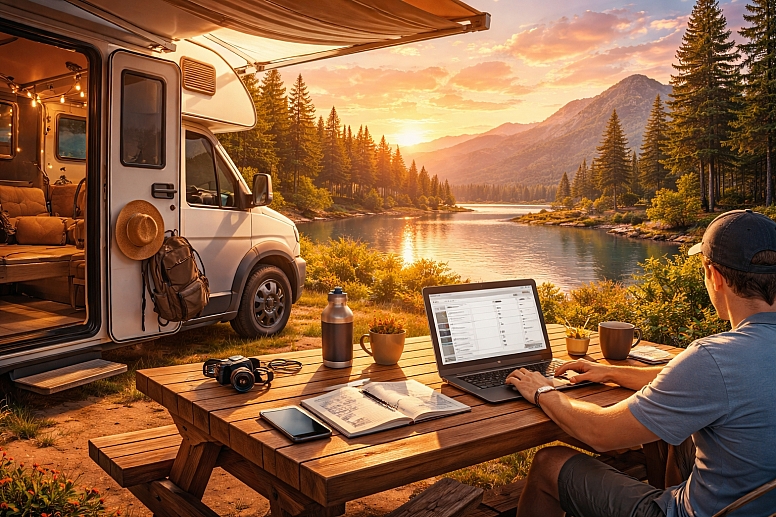
The hard part isn’t dreaming about the road; it’s balancing a steady income, reliable basics, and freedom while transitioning to the RV lifestyle. The people who stick with it lean on a simple approach: building nomadic routines, embracing flexible work, and long-term travel planning that keeps decisions calm instead of chaotic. With that foundation, digital nomad motivation stops being a mood and becomes a plan that survives bad signal days and busy weeks.
Freedom comes from routines you trust, not constant improvisation. Choose one next step this week: block a recurring 60-minute session to practice a missing remote skill and outline a realistic weekly travel rhythm. That consistency matters because it builds resilience, reduces stress, and keeps the journey sustainable.










0.3731